How To Start A Junk Journal
If you’ve ever wondered how to start a junk journal, the good news is this: there’s no wrong way to begin. A junk journal is one of the most forgiving creative hobbies out there, because it’s built from things that already exist – old book pages, scraps of paper, ribbon ends, ticket stubs, and anything else you might otherwise throw away.
If you’re staring at a blank page (or a pile of “junk”) wondering where to start, this guide will walk you through some easy starter steps.
What Is a Junk Journal?
A junk journal is a journal often filled with recycled or repurposed materials, and it’s used to capture memories, ideas, art, or everyday scraps of life. Unlike a traditional journal, it’s less about writing and more about layering – pages, textures, and found materials combined to create something visually rich and personal.
If you want the fuller picture, I cover this in more depth in my post what exactly is a junk journal.
Let’s look at some easy steps that show you how to start a junk journal.
Step 1: Choose Your Junk Journal Base
You don’t need to make some sort of a journal from scratch to get started.
You can use any pre-made journal – a simple bound book with blank pages you can build on. This is the most common way people junk journal, and they use all sorts of different journals too.
I have A5 journals I use that have 120gsm paper inside – thick enough to carry spreads, not too thick that the journal becomes to big too quickly. Some people use journals with 360gsm paper – that’s really only necessary if you plan to write and draw directly onto your journal pages, rather than on top of spreads you create.
If you’d like to take a look at the journals I use you can find them here on Amazon (please note that is an affiliate link – you don’t pay any more if you purchase a product through that link, but Amazon pays me a small percentage for your purchase – which I use to buy more junk journal supplies!).
Step 2: Gather Your Junk Journal EPHEMERA
I love the word ephemera – it perfectly describes the bits, pieces, scraps you can use to create spreads in your junk journal. And that’s the beauty of junk journaling – you probably already have plenty of bits and pieces hanging around at home that you can start your junk journal with. A simple starter kit looks like:
- Old book pages, magazines, sheet music, or newspapers
- Scraps of patterned paper or wrapping paper
- Old envelopes, receipts, boxes from packaging
- Washi tape or cellotape
- PVA glue or a glue stick
- Scissors
- Ephemera – ticket stubs, postcards, doilies, ribbon
- A pen or two for jotting notes
You don’t need fancy tools to begin. Many junk journalers build their entire first journal from things pulled straight out of a recycling bin or a kitchen drawer.
I have a Life Junk Journal Starter kit that you might also like to use – it has a few pages of stickers in a Canva template you can access and use immediately. There’s also a bonus video showing you how to use the template as well as how to start your Life Junk Journal. You can get the starter hit here.
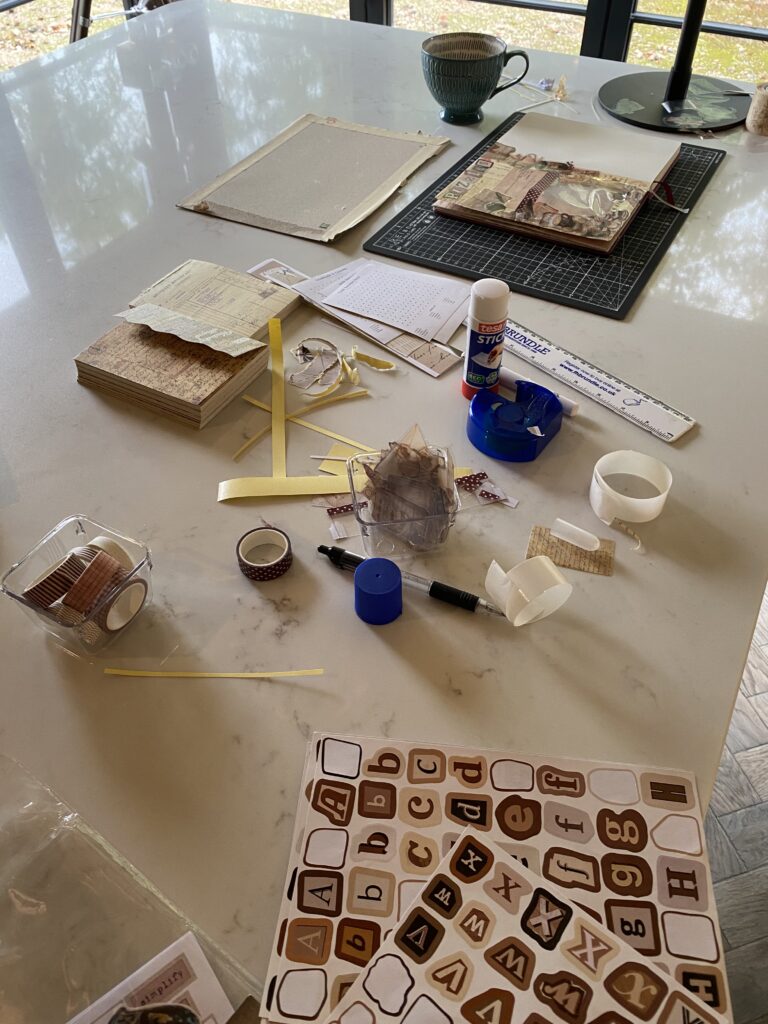
Junk journaling doesn’t have to be perfect – my junk journaling sessions often end up very messy!
Step 3: Pick a Loose Theme (Optional)
Some people prefer a themed journal – travel, nature, a season, a specific year. Others prefer a completely free-form “junk drawer” journal with no theme at all, where anything goes.
My Life Junk Journal is a mash of the two. It has themes although they change from spread to spread, and it’s designed a little differently to a normal junk journal in that it’s there to support and have fun with life, rather than just being a record of what’s happening in life day to day.
That said, you can make your junk journal anything you want it to be, but if you’d like to learn more about Life Junk Journal specifically, you’ll find blog posts here on my site that share lots of the prompts and spreads I create and share.
The best thing about junk journaling is there’s no one right way to create and use them, there’s no artistic level you need to attain – your junk journal is yours to do with as you wish and to be creative in any way you choose.
Step 4: Create Your First Page
This is where beginners often freeze up – but your first page doesn’t need to be perfect, or even good. It’s great to start with a simple title page that requires nothing more than a simple spread. You can get my Junk Journal Starter Kit here to help you with that, or try this simple approach:
- Go to your chosen journal and create a spread on the inside of the front cover. This is what I call your title page.
- Glue down some ephemera you like the look of on to your title page. Don’t try to make it perfect, you’ll learn and find the spreads you like to create best as you go.
- Add a strip of washi tape along an edge if you have some.
- Write a single line – a thought, a quote, a date, or simply the title “Life Junk Journal”.
That’s it. That’s a junk journal page. Repeat this process, and your journal builds itself one page at a time.
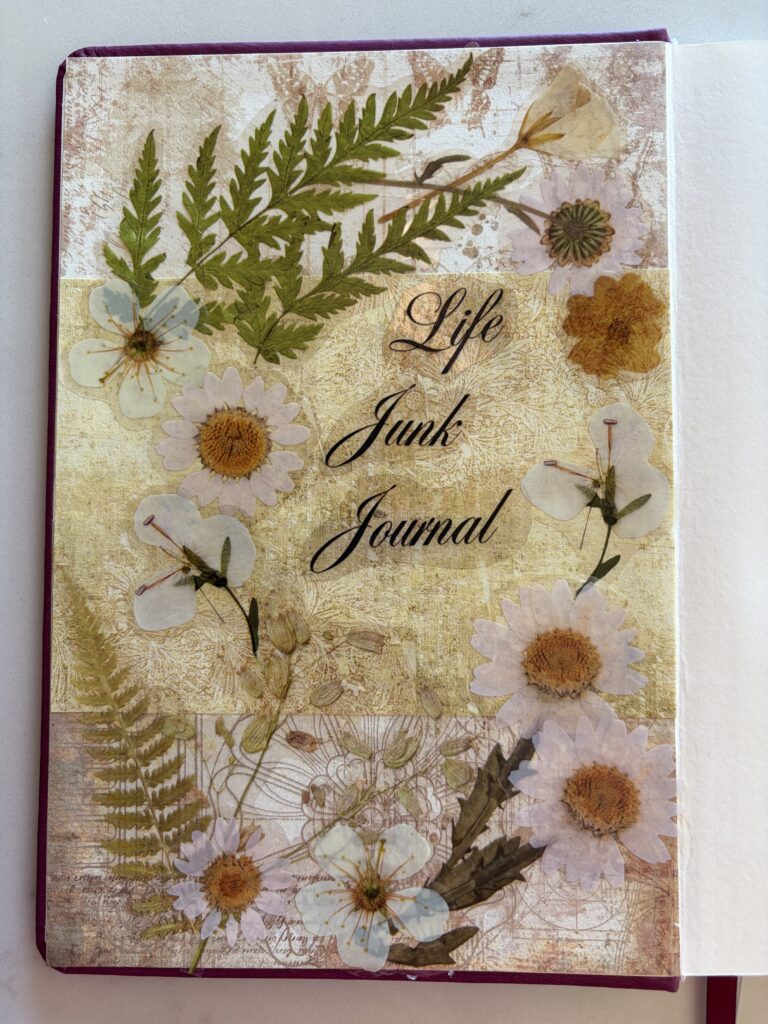
Simple title page in one of my Life Junk Journals
Step 5: Build the Habit, Not the Masterpiece
The biggest mistake beginners make is trying to create “Pinterest-perfect” spreads from day one. Junk journaling rewards consistency, not perfection. A messy, imperfect page you actually finish is worth more than a beautiful spread that’s still sitting half-planned in your head.
I have plenty of spreads in my Life Junk Journal that have mistakes all over them, but it’s pretty easy to cover mistakes with stickers and other ephemera as you layer up your junk journal spreads. It’s a very forgiving hobby!
Set a low bar to start junk journaling so that you don’t feel under pressure:
- One page a week is plenty.
- Keep a small “scraps” box so you always have material on hand.
- Give yourself permission to overlap, tear, and layer imperfectly – that’s the aesthetic.
I started junk journaling by doing a bit here and there – it was a great way to test if it was something I wanted to continue to pursue.
It very quickly became an obsession I love, and a business that gives me great joy to run. These days I’m lucky enough to be able to spend a few hours a day with my Life Junk Journals – and turning it into a business has been a great part of being able to do that.
Where to Go From Here
Once you’re comfortable with the basics, you can start exploring:
- Pocket pages and hidden fold-outs
- Themed spreads (seasonal, travel, gratitude)
- Printable backgrounds and cutout sheets to speed up your pages
- Mixed media techniques like stamping, stitching, or watercolour
- Building a Life Junk Journal that gives you a creative outlet but also more fully supports your life.
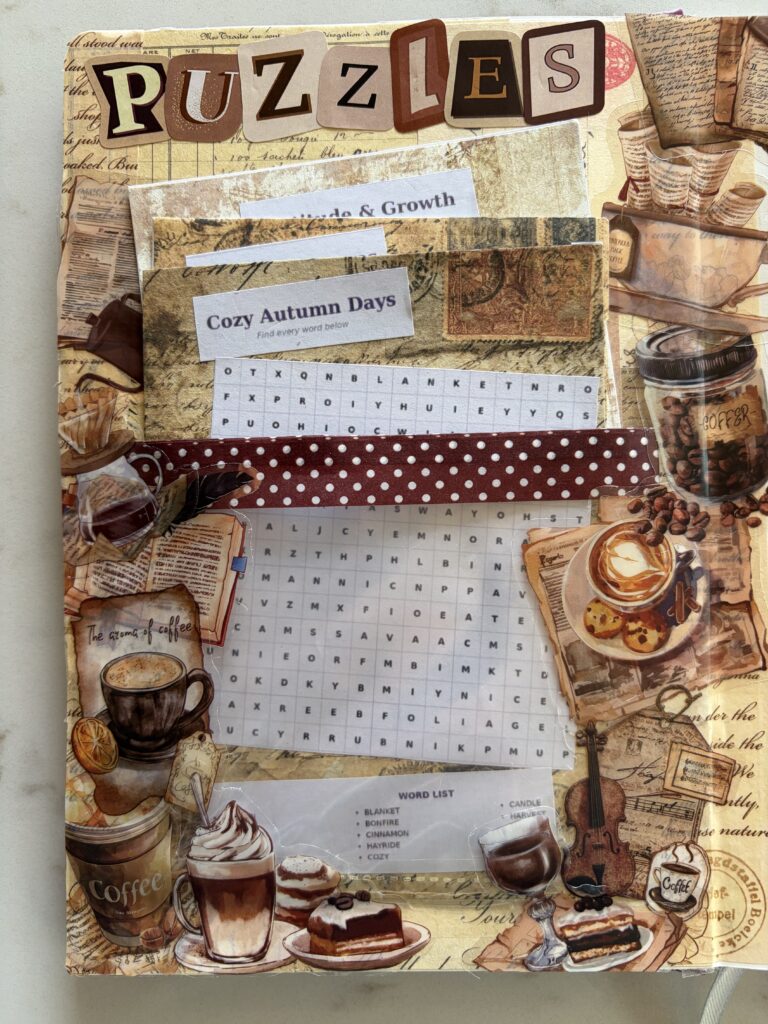
SPREADS FROM MY LIFE JUNK JOURNALS
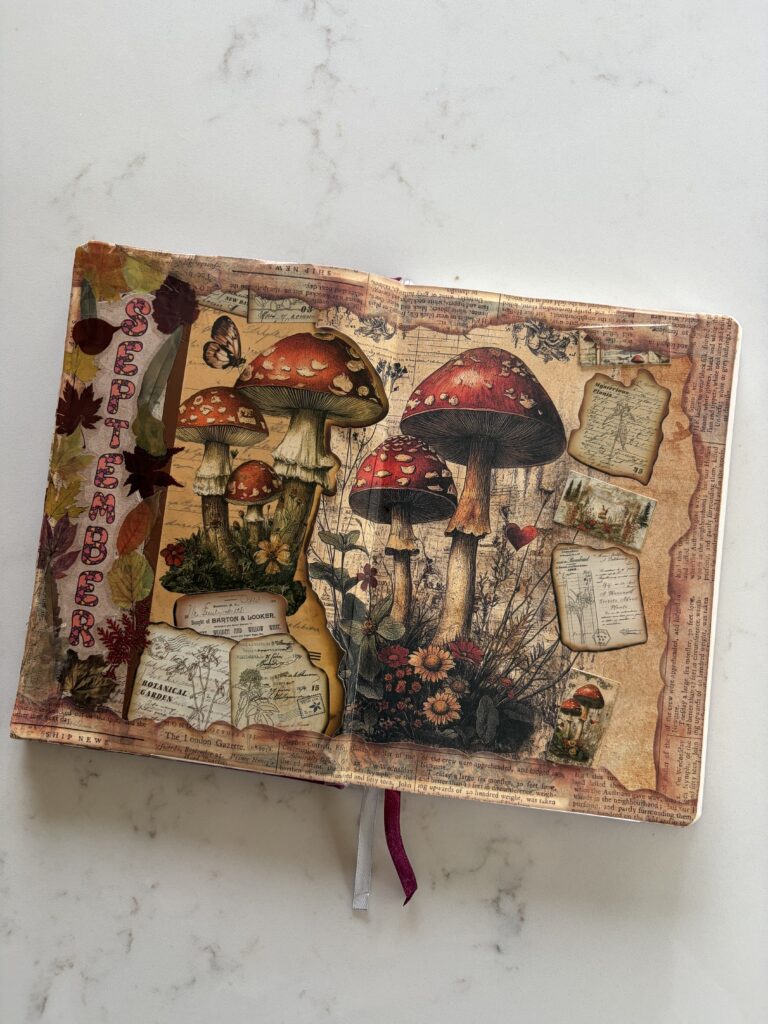
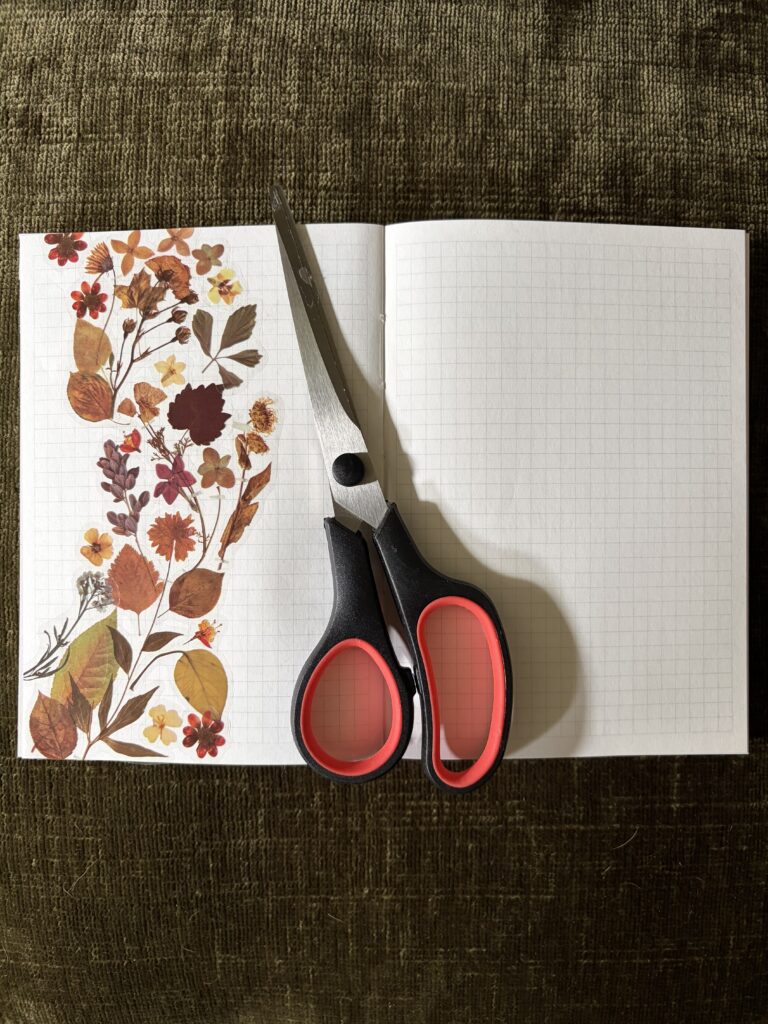
Final Thoughts
Starting a junk journal isn’t about doing it “right” – it’s about giving yourself a low-pressure, tactile space to capture the small stuff. Grab some scraps, glue down a page, and let it be imperfect. That’s the whole point.
FAQ’s
Do I need to buy special supplies to start a junk journal?
No. Most beginners start with things they already have at home – old book pages, scrap paper, receipts, ribbon offcuts, a journal or notepad of some type and a glue stick. You can always add purchased supplies later once you know whether you want to stick with junk journaling.
Is there a difference between a scrapbook and a junk journal?
Yes. A scrapbook is usually built around specific photos and memories laid out nice and neatly on the scrapbook pages. A junk journal is looser, more textural and much more creative – it’s built from layered scraps and ephemera, and it doesn’t need to document anything specific at all.
What size should my junk journal be?
Technically any size, but most people prefer to use A5 journals or similar – they’re less intimidating to fill and easier to carry around.
How long does it take to fill a junk journal?
There’s no timeline and no pressure. Some people fill one in weeks, others take a year or more. One page a week is a perfectly good pace when you’re starting out.
Can I start a junk journal with no theme?
Heck yes – that’s actually the easiest way to begin to allow yourself freedom to just sit and create. I don’t always have a theme in mind when I create. I just follow where the journey leads me. A free-form “junk drawer” journal takes the pressure off – you can always start a themed one later if that’s something that lights your fire.
What do I write in a junk journal?
Anything or nothing! Some people simply create spreads in their journals just for the joy of creating. Others document their daily life. There are no rules, you can write whatever you like – a single word, a quote, a date, a thought about your day. My Life Junk journal is a little different – it’s designed to help support life through fun, creativity and useful prompts to manage your thoughts and your days.