What I Wish I Knew As A Junk Journal Beginner
What I wish I knew as a junk journal beginner. If I could go back and tell myself one thing, it would be this: stop trying to make your junk journal perfect, and just start gluing things down. That one shift would have saved me months of overthinking pages I never actually made, and would have helped me start my junk journal journey much earlier.
I held off starting my Life Junk Journal for a long time because I was stuck in ‘I need to understand everything about this before I get started’, and ‘how the heck will I make my spreads look as perfect as all the spreads I’m seeing online?’
Then I got over myself and just began. And I never looked back.
Here’s everything else I wish I’d known when I was just starting out.
you don’t need all the supplies at first
Of course I went to Amazon and Temu and Etsy and any number of other online stores selling junk journal ephemera, thinking I needed to ‘stock up’ on supplies before I started. Gah!
You don’t need a huge stash of ephemera, washi tape, and vintage paper before you start. The truth is, your first journal can be made almost entirely from things already lying around your house – old envelopes, receipts, scrap paper, a few bits of tape. You build the stash as you go. Nobody starts with a full supply box.
It’s better to start with less, because then you have the freedom to try this whole junk journaling thing out, before you start spending money. Until you give it a go – you’ll not know if it’s for you longer term.
So grab some bits and pieces you have hanging around the house, start tearing up and gluing in (don’t use important documents like your birth certificate – lordy no!)
Get a feel for whether junk journaling is something you want to pursue longer term.
This is what I did, and damn it I was hooked from my first trial spread – I’ve never looked back.
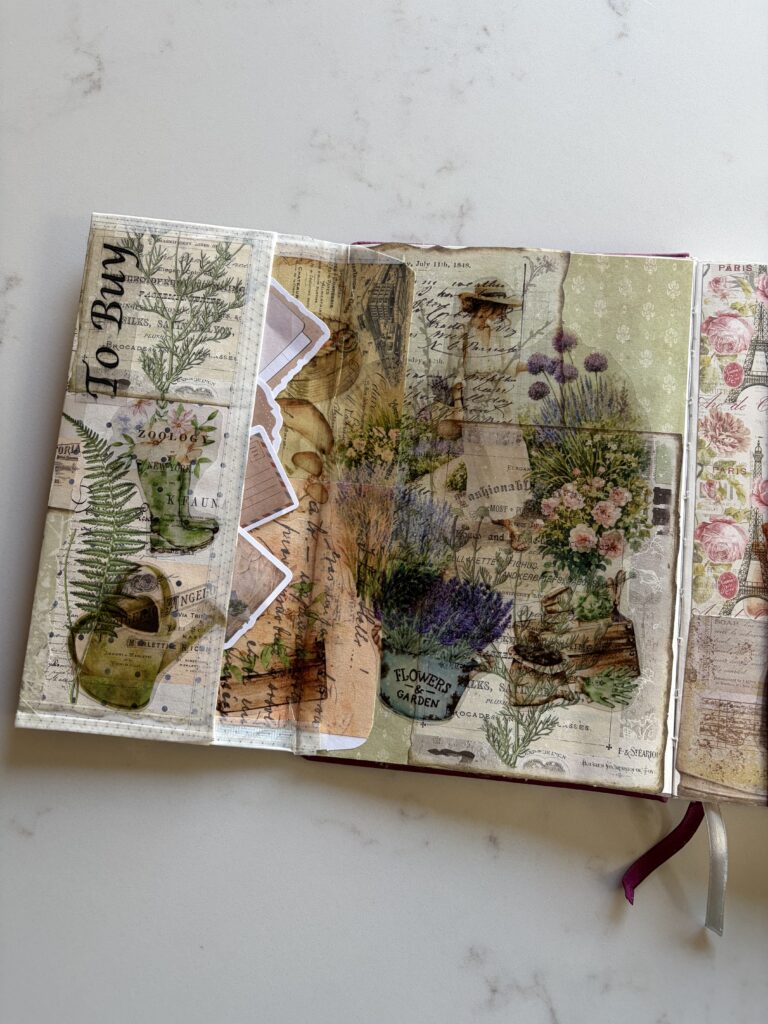
A very early and messy spread inside my Life Junk Journal!
Your first pages will not be your best pages
I look back at my early spreads and say a soft ‘oh bless!’ because they were far from where my Life Junk Journals are today. That’s exactly how it should be.
Your first pages and spreads are where you learn what you like, the techniques that work for you, and what your own style is. They’re not supposed to be gallery-worthy. They’re supposed to teach you something.
I very much lean more towards vintage inspired spreads, or nature inspired spreads, although I encourage myself to experiment all the time (because it’s fun to do!), and so should you.
“messy” is part of the aesthetic, not a mistake
I used to think torn edges, overlapping paper, and slightly wonky gluing meant I was doing it wrong. It took me a while to realise that’s actually the look – junk journaling isn’t meant to be any sort of neat and symmetrical scrapbook type layout. The imperfections are what make a page feel real, and are what makes spreads look like junk journal spreads.
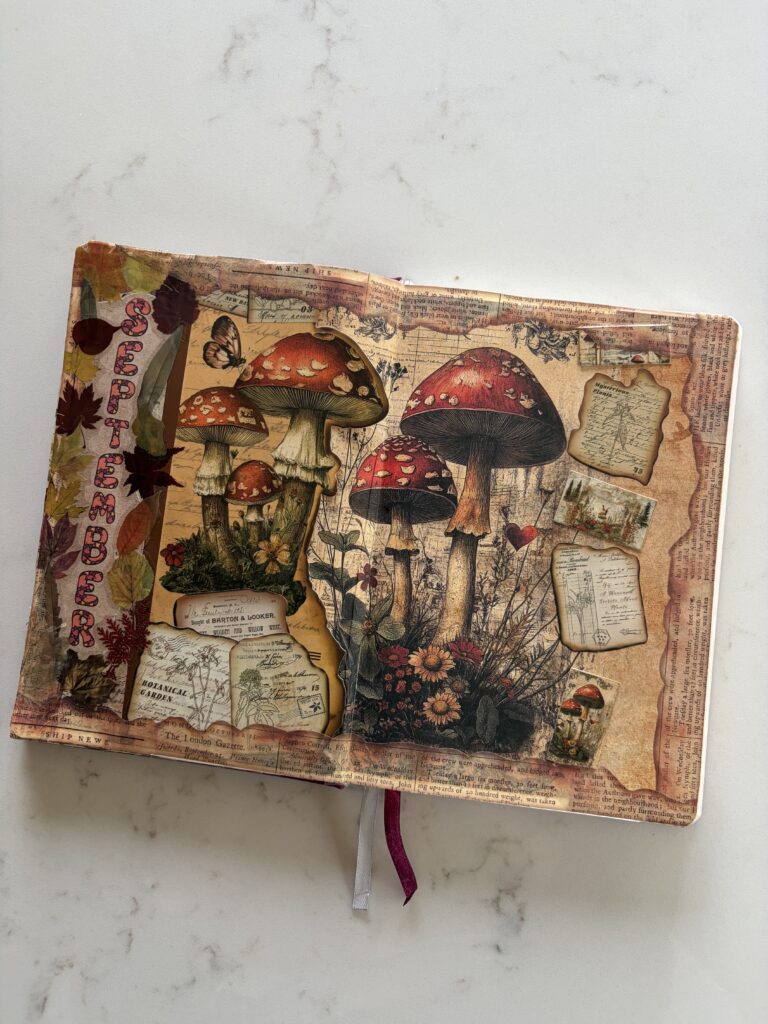
A messy autumnal spread inside my Life Junk Journal
you don’t need a theme to start
I held off starting for ages because I couldn’t decide on a theme. Should I go pink and pretty? Should I go vintage? Should I go celestial?
Looking back, that thinking was completely unnecessary. Some of the best journal spreads I create have no theme at all – I just sit and start to create, and let the journey lead the way.
You can always start a themed journal later once you know what you enjoy creating. I might at some point start a themed Life Junk Journal for myself but there’s no pressure – that’s the last thing junk journaling should be.
For now my current Life Junk Journal (A5), and my mini Life Junk Journal (A6) are filled with a cacophony of different spreads, and I love sitting and flicking through them.
it’s ok if you don’t journal every page
I put pressure on myself early on to write something meaningful on every single spread. This is especially true because Life Junk Journal is a little different to a normal junk journals, in that it’s there to support your life with spreads that take you on a journey.
Some junk journal pages just don’t need words – sometimes a page of layered paper and stickers is enough on its own, and is all you might need in one sitting.
There are spreads in my Life Junk Journal that are just that – spreads and nothing else. I save the writing for the pages that actually need it.
small journals are easier to finish than big ones
I like to work with an A5 Life Junk Journal for my main journal (I use this brand – please note that’s an affiliate link on Amazon – you won’t pay more for the product if you buy it, but Amazon will pay me a small commission – which I’ll spend on junk journal supplies!).
I also have a mini Life Junk Journal that I can pop in my bag and carry around with me – it’s A6 in size. That often captures daily thoughts, and gives me something to write in if, for example, I’m sitting waiting somewhere for an appointment to start.
A smaller journal – or a mini journal you can carry with you gets filled far more quickly, and finishing something (even something small) is genuinely motivating.
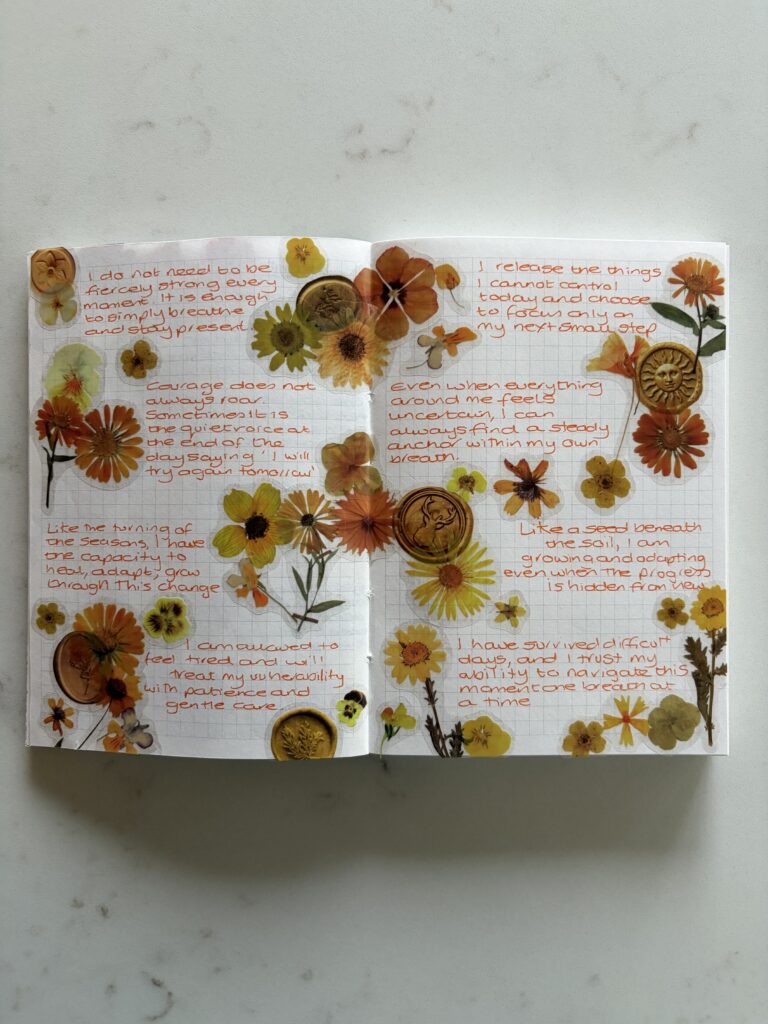
My Mini Life Junk Journal with a floral spread and 8 written intentions to carry with me
comparing your pages to pinterest will slow you down
Those beautifully curated spreads you see online often took hours, sometimes with dozens of discarded attempts you never see.
Comparing your first few pages to someone else’s hundredth page is a fast way to lose motivation. Look for inspiration, not a standard to match.
Every spread in my Life Junk Journal is far from perfect. But the important thing is – it’s mine. It’s the way I work and create, the way I like things to look. And whilst I see some extraordinary spreads online, I do not put myself under pressure to create the same.
Life Junk Journal is there to support life, not add a layer of obligation and pressure to it.
what i wish i knew as a junk journal beginner – final thoughts
If you’re just starting out, the biggest lesson I can pass on is this: junk journaling isn’t about getting it right, it’s about starting.
Grab some scraps, glue down a page, and let it be exactly as messy and imperfect as it needs to be. That’s genuinely the whole point.
If you’re ready to start a Life Junk Journal, grab my free Life Junk Journal Starter Kit to get going, and check out my other blog posts – there’s plenty of inspo for you here (including some related posts below).
FAQ’s
What’s the biggest mistake beginner junk journalers make?
Waiting until everything feels “ready” – enough supplies, the right theme, a clear plan – before starting. The best way in is to grab your journal and glue down a first page with whatever you already have.
Do I need expensive supplies to start junk journaling?
No. Most beginners can make their first journal almost entirely from things already at home – old envelopes, scrap paper, receipts, and a bit of tape. You build your supply stash gradually, not all at once.
Is it normal for my first junk journal pages to look messy?
Yes, completely. Mine are always this way! Messy, overlapping, imperfect pages are part of the aesthetic, not a sign you’re doing it wrong – and your early pages are where you figure out your own style.
related posts
What Exactly Is A Junk Journal?