What Exactly Is A Junk Journal?
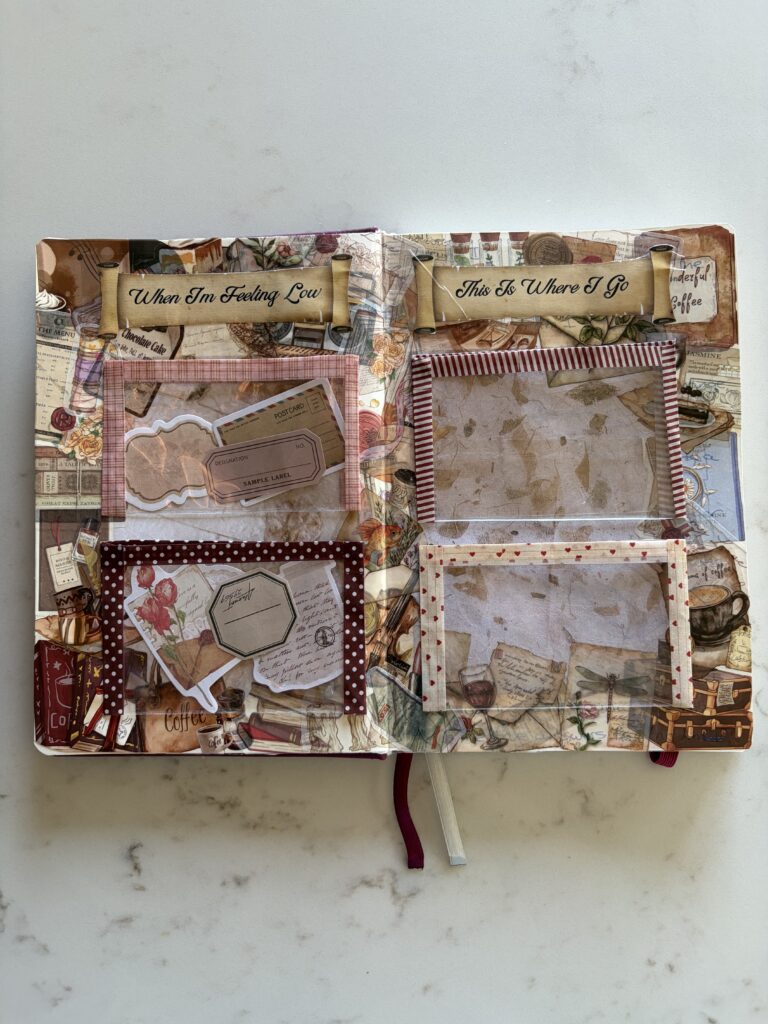
What exactly is a junk journal? It’s a journal made from recycled paper and everyday scraps – old book pages, receipts, envelopes, ticket stubs, fabric offcuts – layered and glued together into a book worth keeping. It can also be made from stickers and other ephemera you can purchase from craft suppliers. Part scrapbook, part diary, part little art project, there’s no fixed format with a junk journal and no rules beyond making it yours.
There’s something wonderfully freeing about junk journaling. No blank white pages you’re scared to ruin. No pressure to make it look “right.” Just paper, glue, stickers and whatever else you choose, including scraps you were probably about to throw away anyway.
Once you try junk journaling, it’s hard to go back to a normal notebook! After many years dipping in and out of bullet journals and planners that never really lit me up or stuck, junk journaling found me, and it became a happy obsession and a huge part of my life.
Note: This post contains affiliate links. If you make a purchase through one of these links, I may earn a small commission at no extra cost to you. I only recommend products I genuinely use and love. Thank you for supporting Life Junk Journal!
Junk Journal vs Scrapbook vs Art Journal – What’s the Difference?
There’s an overlap with each of these types of creative journals, but here are the differences:
- A scrapbook is usually about organising photos and keepsakes neatly on a page.
- An art journal is more about painting, drawing, and creative expression on the page.
- A junk journal borrows a bit from both – however the focus is on the materials themselves. Old paper, found objects, texture, and layers, built from things that already existed rather than things bought specifically for the page.
what goes in a junk journal?
This is the bit people love once it clicks: you probably already own half of what you need.
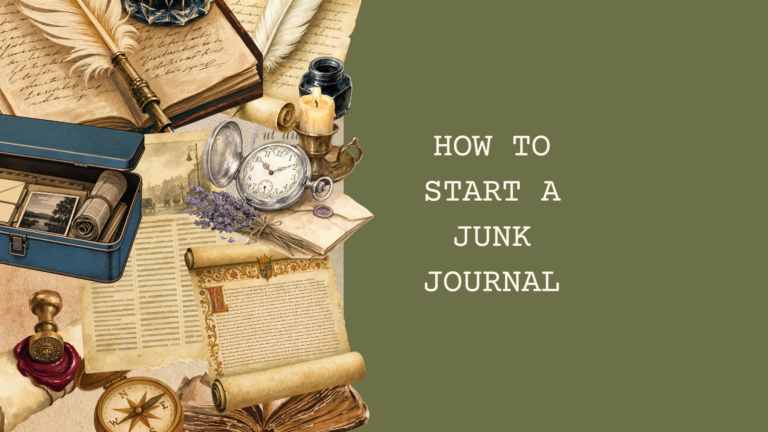
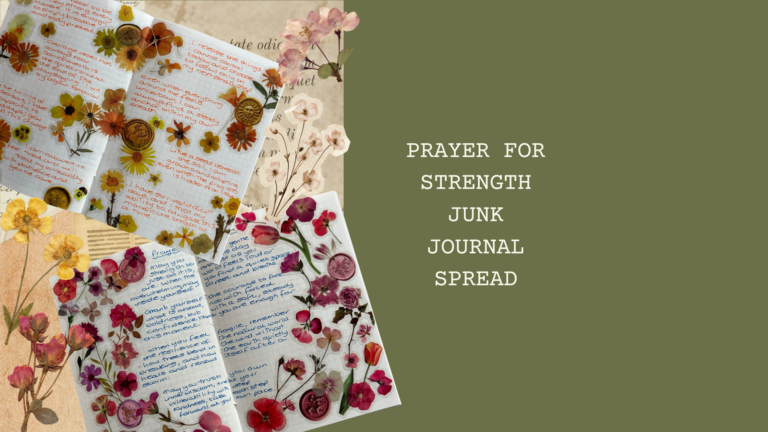
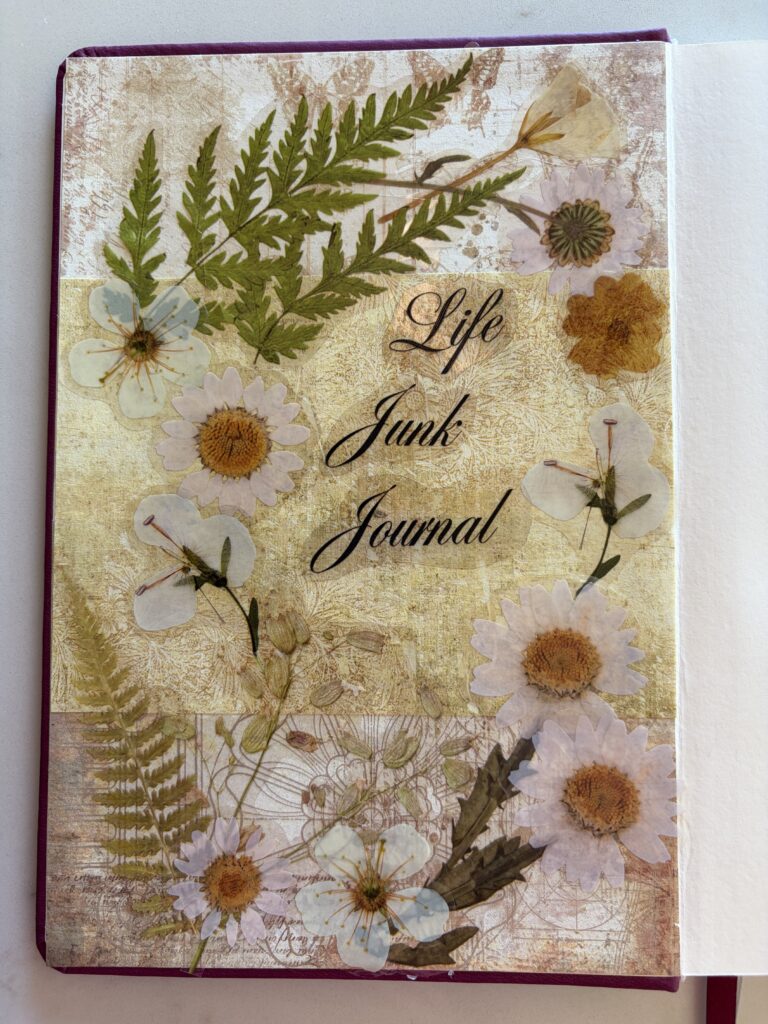
Junk journals are built from old book pages, newspaper clippings, used envelopes, tea-stained paper, fabric scraps, magazine cut-outs, pressed flowers, ticket stubs, wrapping paper offcuts – anything with a bit of texture or story to it can go in. Nothing has to be new. In fact, the more “used” it looks, the better it usually fits.
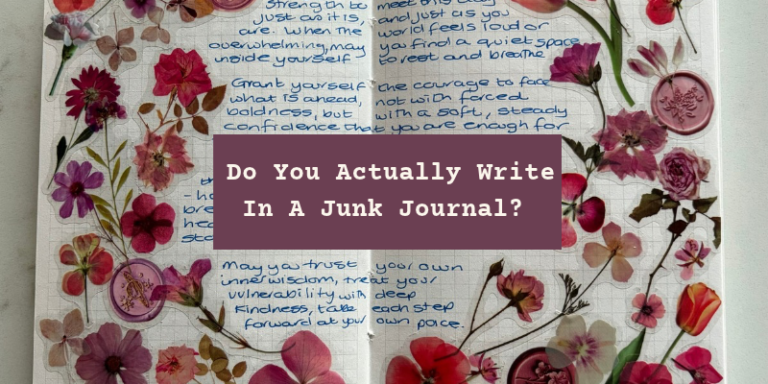
Many people use a junk journal simply for the joy of creating different spreads. Others use junk journaling for spreads and a record of what’s happening in their lives.
The Life Junk Journal is different, and truly unique. It blends junk journal spreads with all sorts of fun, creative, entertaining, useful and supportive layouts and prompts, so that it actually has real value to you in your life, over and above it being just a creative hobby.
Once you’ve tried Life Junk Journaling, you may never go back.
Why People Love Junk Journaling
Well, if you’re anything like me, it’s less about creating something Instagram-perfect, and more about having a fun place to actually process real life – the good weeks and the messy ones.
It’s low-pressure, it’s tactile, and there’s no “wrong” way to do any page. That’s a big part of what I’m building Life Junk Journal around – journaling real life, supporting real life, having fun with real life over just pretty spreads that look nice but don’t do anything more than that.
Do You Need Any Skill or Experience to Start?
Heck no – genuinely. My artistic skills have never got past kindergarten stage. 🙂
The brilliant thing about junk journaling is it’s one of the most forgiving creative hobbies out there, because “imperfect” isn’t a mistake, it’s the style.
Wonky edges, visible glue, mismatched paper – it all belongs, there are no junk journal police, nor any junk journal mistakes. There’s simply your creativity on the page in the moment, in whatever form that takes.
Some of my Life Junk Journal spreads are great – others felt like mistakes beginning to end. It doesn’t matter – every page serves a purpose, every page allows you to spread your creativity out into your junk journal in whatever form that takes. It’s a journey, and a fun one to go on.
What You Need to Get Started
You don’t need much and you certainly don’t need to spend a lot of money.
You’ll need a journal (I use these A5 ones and have found them to be great), you’ll need some glue like pritt stick, and whatever scraps of paper, card, material, stickers, old books, receipts, packaging boxes you’ve got lying around.
That’s really all you need to begin – and it’s worth not spending too much on supplies up front, until you’ve decided whether junk journaling is going to take over your life, as it has done mine.
I hope this post has helped you understand “What exactly is a junk journal?” And will encourage you to start your own junk journal journey!
If you want some support and tips to get a Life Junk Journal started, I have a Junk Journal Starter Kit that includes a how-to video – plus a free set of ready-to-use printable pages in Canva. You can grab my free Life Junk Journal Starter Kit below.
FAQ’s
Is a junk journal the same as a scrapbook?
Not quite – a scrapbook is usually more about neatly preserving photos and memories, while a junk journal leans into texture, layers, and repurposed materials as the main focus.
Do I need expensive supplies to start?
No. Most people start with paper and materials they already have at home.
Can I use paper I already have lying around?
Yes – that’s actually the whole spirit of it. Old receipts, envelopes, book pages, and packaging all work beautifully.
What if my pages don’t look “good”?
There’s no such thing as a bad page in a junk journal – imperfections are part of the style, not a mistake to fix.
Ready to start your JUNK JOURNAL?
Grab my free Life Junk Journal Starter Kit – it’s got everything you need to create your first page, no experience required. You’ll soon start to love the unique and creative Life Junk Journal process.