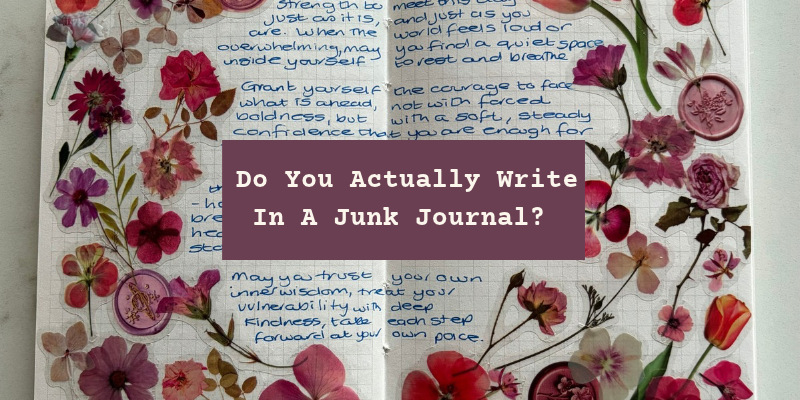
DO YOU ACTUALLY WRITE IN A JUNK JOURNAL?
Do you actually write in a junk journal? Yes, you can write in a junk journal, and plenty of people do, but you don’t have to. Some junk journals are full of handwriting. Some have a few words tucked behind a flap. Some have no writing at all and are purely pages of paper, pictures and scraps that somebody enjoyed putting together. All three are proper junk journals. How much you write in a junk journal is entirely up to you.
That’s the short answer. The longer answer is that some people get stuck on this question because they think there’s a correct way to junk journal. There isn’t. But there are some easy ways to add words to your pages without it feeling like homework, so let’s go through them.
Why This Question Comes Up So Often
The word “journal” makes you think of a diary, a daily entry, a neat page of thoughts in your best handwriting. Then you look at junk journals online and they’re covered in lace, tea-stained paper and vintage labels, with barely a sentence in sight. No wonder it’s confusing.
What goes inside a junk journal is your call. For some people it’s a diary with pretty pages. For others it’s a scrapbook, a memory keeper, or simply something lovely to make at the kitchen table.
What to Write in a Junk Journal
If you do want words on your pages, you don’t need to write long entries (but you can do that if you choose!). No rules remember!
Here are some entries that work well and take very little effort:
- Lists. Favourite films, things you’re grateful for, books you’ve read this year, things you refuse to tolerate. Christmas lists.
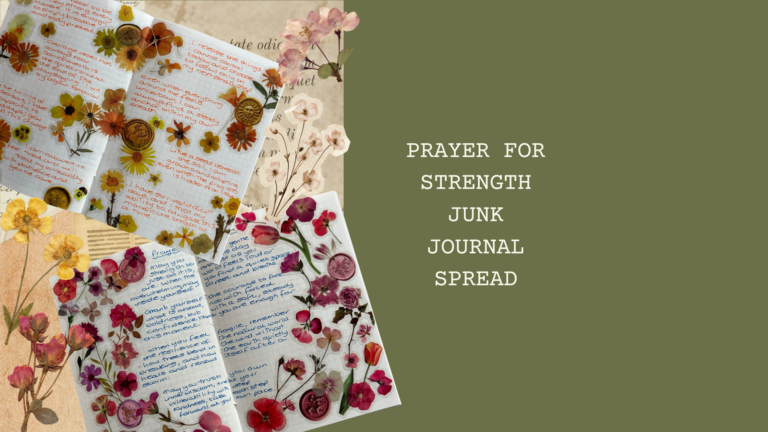
- Prayers, quotes and song titles can also work well. A few lines that mean something to you can carry a whole spread. My Prayer for Strength spread is built around one short prayer.
- A date and a sentence. “Rained all day. Made soup. Hetty slept through the lot.” That’s a journal entry. It counts. My mini Life Junk Journal captures many small moments like this.
- Captions. If you’ve stuck in a ticket, a photo or a receipt, write where it came from and who you were with. In five years you’ll be glad you did.
- Recipes and notes to self. Handwritten recipes look gorgeous on a page and you’ll actually use them.
- Letters you’ll never send. To your younger self, to someone you miss, to someone who got on your nerves. These go nicely inside an envelope pocket where nobody else will read them.
- Single words. One word in big letters across a page is still writing.
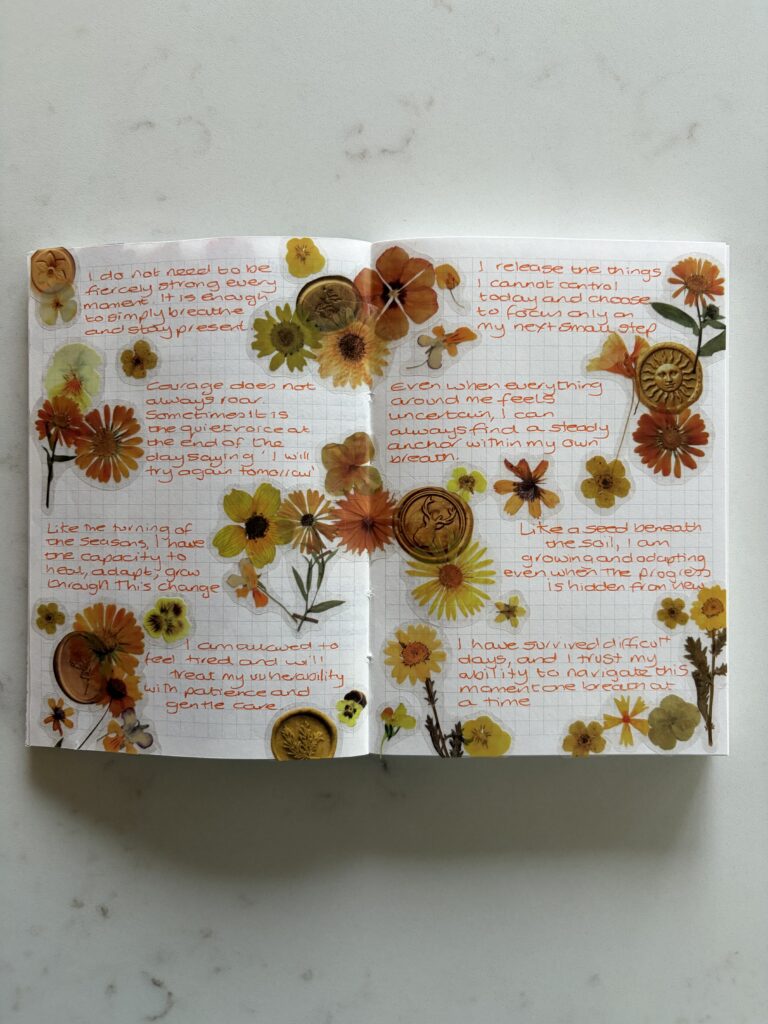
An example of writing inside my mini Life Junk Journal
Where the Writing Goes
This is the bit that makes junk journals different from an ordinary notebook. You rarely write straight onto the page. The writing usually sits on something that’s been added to the page:
- Journal cards slipped into pockets
- Tags tucked behind a belly band or a strip of lace
- Lined paper or old ledger paper glued down as a writing spot
- The inside of a flap or a fold-out
- The back of a photo or postcard
- A plain label or a scrap of cream paper stuck over a busy background
Hiding your writing is one of the best things about a junk journal. The page looks decorative to anyone flicking through, and the personal words are tucked away where only you know to look. If you want an easy place to start, this blog post shows you how to turn old envelopes into junk journal pockets.
What If You Hate Your Handwriting?
Almost everyone says this. Here’s what I’d tell you.
Your handwriting is the most personal thing on the page. Nobody treasures an old recipe card because the lettering was perfect. They treasure it because of whose hand wrote it. My writing is far from perfect, and certainly not like some of the beautiful handwriting you see others sharing in their junk journals.
Perfection is not the point. Your junk journal is yours and should be true to you – imperfections and all.
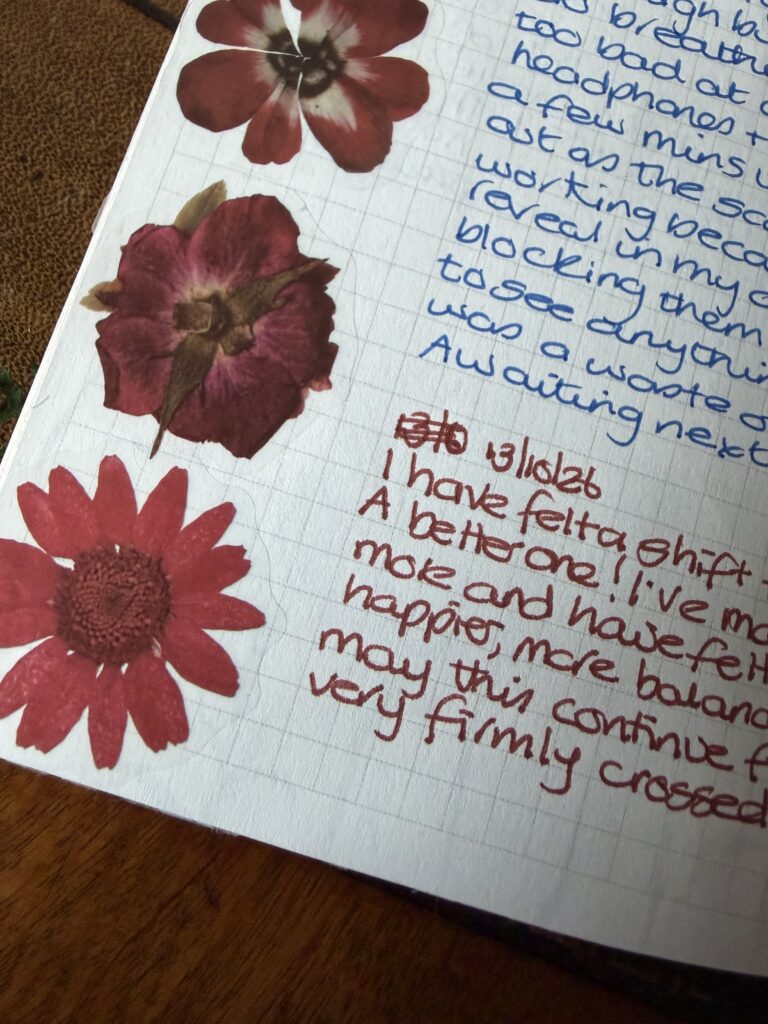
Perfection is not the point and mistakes are ok and part of the journey!
If you really can’t bear to have your own handwriting in your junk journal, you have options.
You can type your words and print them on paper. You can use alphabet stickers or stamps. You can cut words and phrases out of old books and magazines and arrange them into sentences. You can write on a tag first, and only glue it in if you like how it turned out. You can buy lettering stencils, lay one on the page and trace the letters with your pen..
More importantly – the more you write, the less you’ll care. It wears off quicker than you’d think.
Can You Have a Junk Journal With No Writing at All?
Absolutely. Many people make junk journals purely because they love the making: choosing the papers, layering the pieces, adding ephemera to pages to create their own designs. Inside my own Life Junk Journals I have some pages that are purely visual spreads, and other pages full of writing on the spreads I’ve built.
You can decide page by page. One spread might be covered in your thoughts, the next might be nothing but florals and a bit of ribbon. A junk journal doesn’t have to be consistent.
Writing Before or After You Decorate?
There’s no rule here either, but if you’re a beginner, decorate first and leave yourself space. Glue down a plain piece of paper, a label or a card as your writing spot while you’re building your spread. Then you can come back and write on it whenever you’re ready, whether that’s today or next month.
You can also write your words first and build the page around them. There are no rules!
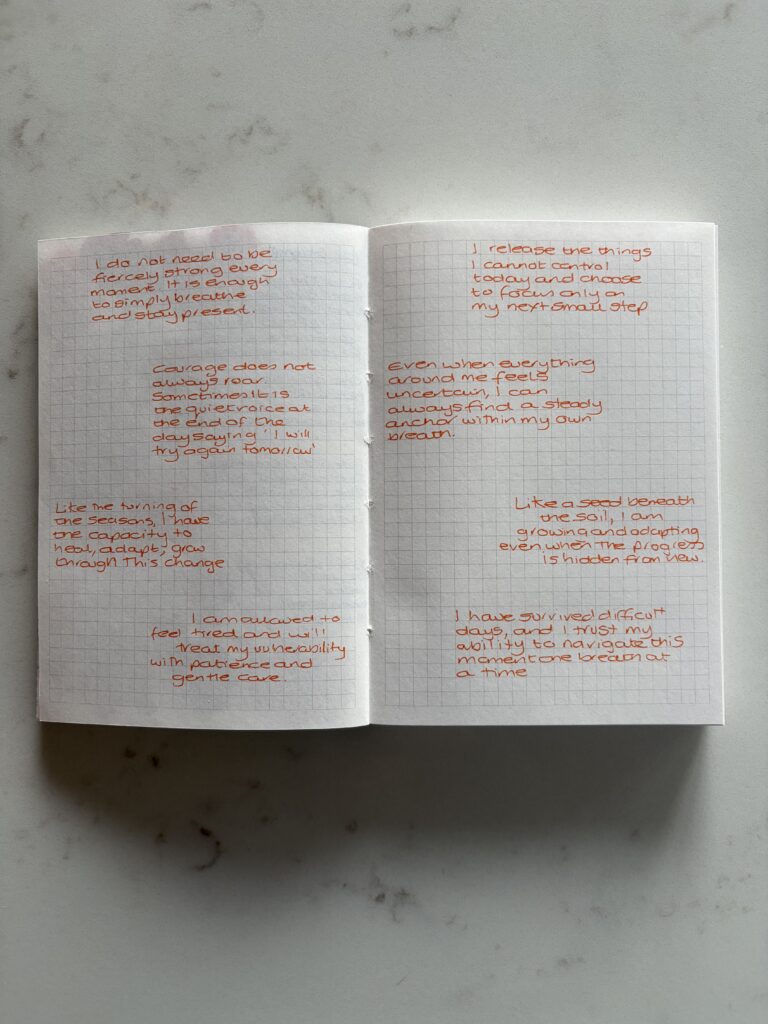
Writing in my mini Life Junk Journal first.
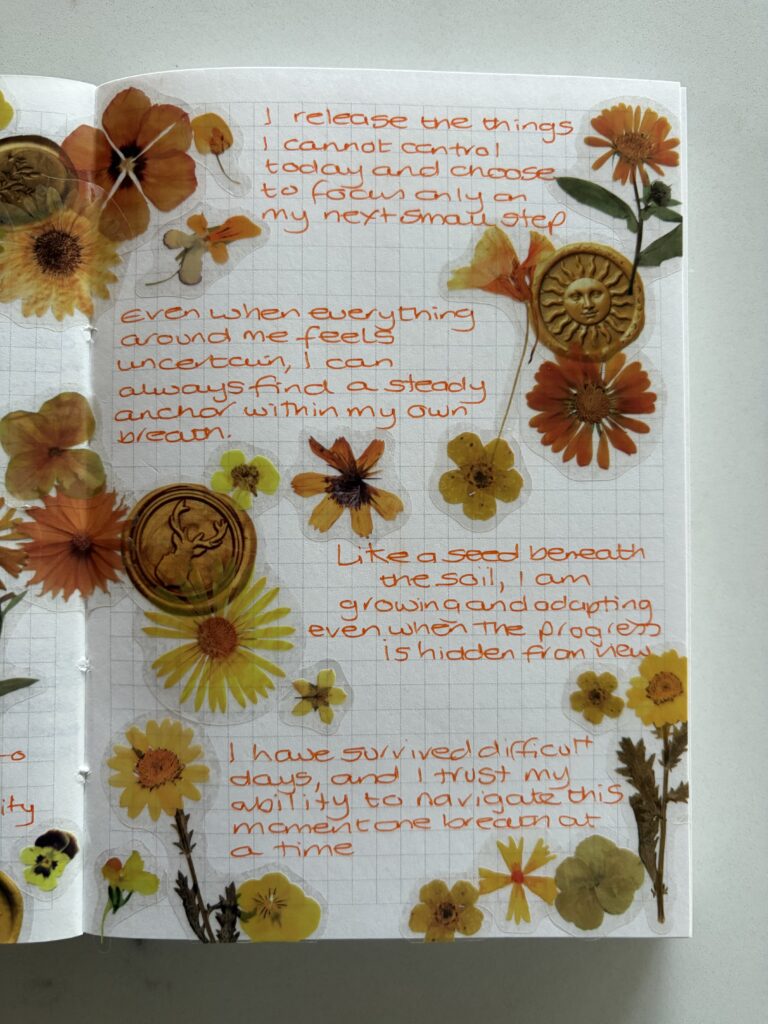
Adding stickers around the text to finish the spread.
DO YOU ACTUALLY WRITE IN A JUNK JOURNAL? Final Thoughts
So, do you actually write in a junk journal? Only if you want to.
Write a lot, write a little, or don’t write at all. The only way to get it wrong is to leave the book sitting empty because you were worried about doing it properly.
If you’re new to junk journaling and want some inspo to get started you can get my free starter kit here: https://lifejunkjournal.co.uk/startersignup
If you’ve got a page you’ve written on and you share it on Tik Tok or Instagram, tag me @lifejunkjournal. I’d love to see it.
FAQS
Do You Have To Write In A Junk Journal?
No. Writing is optional. Lots of people make junk journals purely for the pleasure of putting the pages together, and others fill theirs with lists, memories and notes. You can also mix the two, with some pages written on and some left purely decorative.
What Do You Write In A Junk Journal If You Don’t Know Where To Start?
Start small. Write the date and one sentence about your day, a list of things you’re grateful for, a favourite quote, or a caption for something you’ve stuck in. Short bits of writing are easier to keep up than full diary entries, and they still tell your story.
What Pen Is Best For Writing In A Junk Journal?
A waterproof fine liner or a ballpoint is the safest choice, because junk journal papers vary so much. Gel pens can smudge on glossy or coated paper, and felt tips can bleed through thin pages. Test your pen on a scrap of the same paper before you write on the real thing.
Can I Use A Junk Journal As A Daily Diary?
Yes. Add plenty of writing spots as you build it, such as lined paper, journal cards and tags in pockets, and you’ll have room for a daily entry. Many people find they write more in a junk journal than a plain notebook because the pages are nicer to come back to.
related posts
What I Wish I Knew As A Junk Journal Beginner